The Interplay Between Progressive Payout Systems and Swiss Gambling Compliance Standards
Finley Weber · Oct 7, 2026

The Interplay Between Progressive Payout Systems and Swiss Gambling Compliance Standards
Progressive payout systems accumulate portions of each wager into growing jackpots that can reach substantial sums across linked games, while Swiss gambling compliance standards enforce strict controls on fairness, transparency, and player protection through the Federal Act on Games of Chance and Casinos. These two elements intersect when operators must certify that progressive mechanisms meet technical requirements set by the Swiss Federal Gaming Board before any jackpot contributions begin.Core Mechanics of Progressive Payout Systems
Progressive jackpots operate through dedicated software that tracks contributions from participating slots or table games, with seed amounts and increment percentages fixed in advance according to licensing conditions. Data from regulatory filings shows that Swiss-approved systems must isolate jackpot pools within licensed servers located inside Switzerland, preventing cross-border pooling that could complicate oversight. Operators configure these pools so that random number generators trigger payouts at predetermined probabilities, and independent testing laboratories verify each configuration before deployment.Swiss Regulatory Framework Governing These Systems
The Federal Act on Games of Chance and Casinos, effective since 2019 and updated through subsequent ordinances, requires all progressive features to undergo certification by accredited bodies before public availability. Compliance standards mandate detailed reporting on jackpot accumulation rates, with operators submitting monthly data that includes contribution percentages, current pool values, and payout histories. As of October 2026, the Swiss Federal Gaming Board introduced enhanced audit protocols that examine whether progressive triggers align with approved mathematical models, particularly for games that combine local and networked jackpots.Observers note that these rules differ from frameworks in other jurisdictions because Switzerland prioritizes localized control and prohibits unlicensed international jackpot networks. Research indicates that certified systems must demonstrate clear separation between base game returns and jackpot contributions, ensuring the overall return-to-player percentage remains within approved ranges even as jackpots grow.
Technical Compliance Requirements for Progressive Features
Every progressive system deployed on Swiss platforms undergoes evaluation for random number generator integrity, with specific attention to how jackpot triggers interact with standard game outcomes. Compliance documentation requires operators to maintain immutable logs of every contribution and payout event, accessible to regulators upon request. Those who've examined the standards observe that seed funding for new progressive pools must come from operator reserves rather than player funds, a measure that prevents early players from subsidizing later jackpots.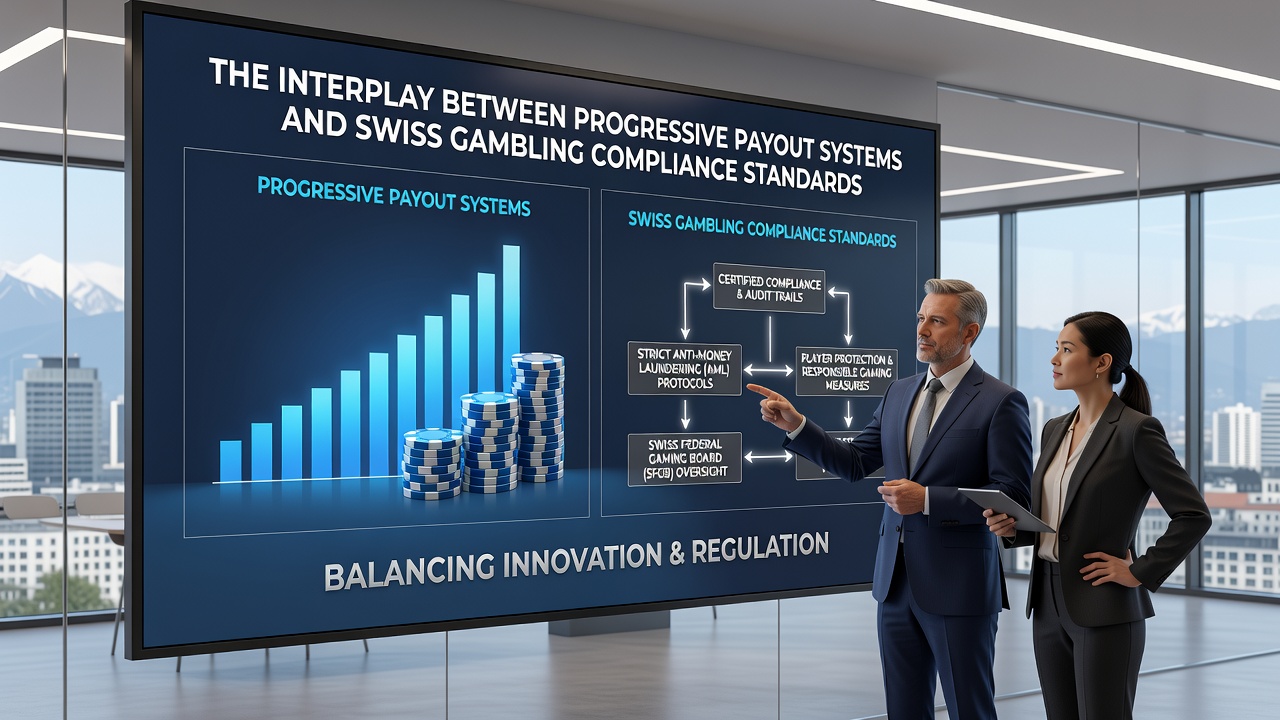 What's significant is that any change to contribution rates or trigger probabilities requires fresh approval, creating a structured process that ties software updates directly to regulatory review. Figures from industry reports reveal that Swiss-licensed casinos typically allocate between 0.5 and 3 percent of wagers to progressive pools, with exact figures disclosed in game rules that must remain visible to players at all times.